

Gen-Z needs to be career-ready sooner — a lot sooner.
Listening to Cura co-founder and CEO Jen Elena Romano, I realize I’m at ground zero of the biggest employment challenge facing our society right now: young people graduating college.
New grads are losing ground, according to Jen. “Right now, it's the first time that college graduates have a higher unemployment rate than the average American.”
As I’ve written in this newsletter, the career ladder that boomers, Gen-X and most millennials grew up with is dead, or at least in the process of dying off. AI has slowed hiring for roles — or eliminated roles — that were typically found on the first few rungs of the ladder.
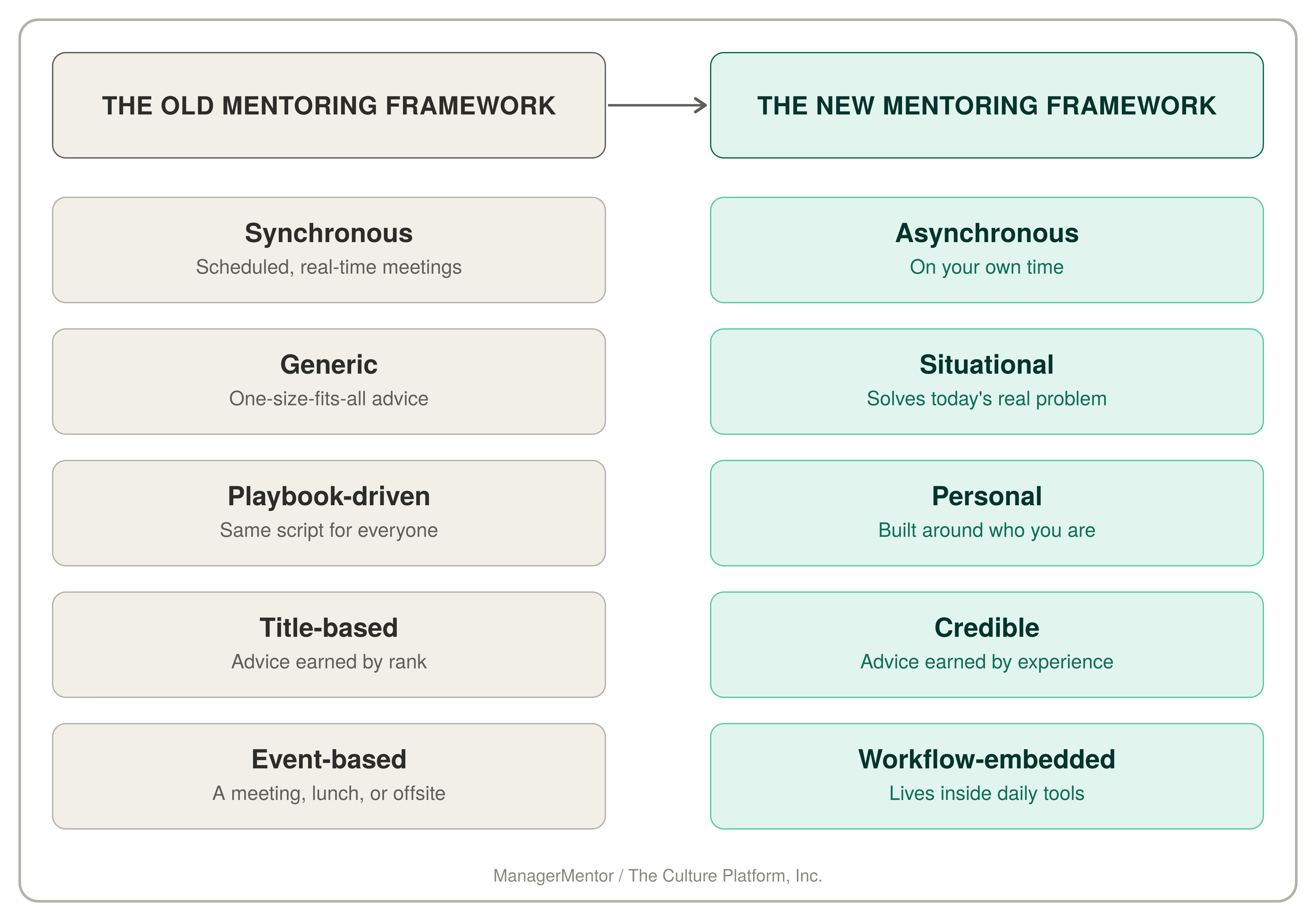
It’s why I wrote last week that Gen-Z needs a new kind of mentoring — and I proposed a framework to start the conversation. So I started seeking out ideas, not just my own. And that’s how I found Jen at Cura.
I walked away from my interview with Jen thinking: Gen-Z needs to start the career process a lot earlier than any other generation in the last 75 years.
Jen says there are two years between college and the start of a career that no one tracks. “Nobody really measures” them, she says. “I think of them as the lost years.”
Career readiness starts in college, not on the job.
Cura’s been on college campuses like California State University, Fresno, and here’s what Jen and her team have learned: “The students aren't necessarily ready for the mock interviews or for the resumes yet,” Jen says. “Students need to take a step back to start thinking about their unique identity and forming that distinct identity."
It makes sense: with AI, cover letters and resumes all sound very similar. “Students need to be more distinct,” she emphasizes. Here’s what I love: our humanness is what differentiates us.
But here’s the catch: For the last 75 years, early-in-career grads could wait until they were in their mid-twenties, with 3-5 years of working experience, to figure this stuff out.
With the lower rungs of the ladder disappearing, Gen-Z needs to understand what makes them unique before starting a career — that’s the modern definition of career readiness.
Most students don’t know what makes them different, or they undervalue it, according to Jen. One student Jen worked with woke up at 4 a.m. to manage a local grocery store. “This was something that he was a little bit embarrassed about and didn’t see the value in why an accounting firm would care about that.”
The Key: Informed Self-Awareness
I remember being 20 and clearly remember both my kids at 20 — and I wouldn’t say any of us at that age grasped our differentiated talents, or as Jen said, what makes us distinct.
I’ve written a lot about aligning a job role to someone’s strengths — to increase someone’s odds of outperforming (and getting recognized). I really like Cura’s self-awareness framework (they call it “VIEWS”) to help someone think about themselves. “Students need to build clarity on their Values, Interests, Experiences, Wins, and Skills,” Jen told me. “This creates the foundation for confident storytelling and career direction.”
My experience as a manager has taught me that what Jen is saying is really important. People with a high level of self-awareness almost always show up better.
So the future is here for Gen-Z: they need to start getting ready for their careers sooner — a lot sooner.
If you’re managing young people right now — or parenting one — it’s not too early to start asking some simple questions to plant the seeds of clarity and get the self-awareness process started: What do you stand for? When did you solve a messy problem? What are you great at?
One other important lesson: meet people where they are.
I also thought this was an important learning from Jen: this generation is busy, often working multiple jobs to get through college. Many first-generation students work 25 hours a week, she told me.
If you’re going to better mentor college students, the best place to do it is where the students are: “Embedded inside the classroom and mandatory,” she says.
I can’t help myself, but I love organizations that truly understand their customer. One of the principles in the mentoring framework I introduced last week is: It’s embedded in the workflow. That’s why I think Cura’s got a shot at changing how college students get ready for careers. They’re in the workflow. Bravo.
How good a manager are you?
Where do you rank on the Six Drivers of Consistency? Take the Self-assessment.
How to be a Great First-time Manager: The Culture Platform
The only purpose-built mentorship system for first-time managers of people.
The corporate ladder has been dismantled rung by rung by AI. For millennials and gen-z, the predictable career path has vaporized — and most managers are navigating it alone, without any formal training.
I’ve managed about 5,000 people in my career, and I was consistently ranked in the top quartile of all managers at Cisco, one of the world’s best places to work. I’ve walked in your shoes as a manager.
I left Cisco to answer one question with research and evidence: what does the manager of the future look like?
My research — conducted with thousands of young people at companies like Amazon, Google, Disney, and DoorDash — identified Six Drivers of Consistency that separate great managers from the rest, with a 95% confidence interval.
That research became The Culture Platform: a complete mentorship system — Framework, Feedback, and Tools — purpose-built for first-time managers who want to separate themselves and be a great manager of high-performance teams.
ManagerMentor • All Rights Reserved • The Culture Platform, Inc. • 2026